New York Times Restricts Photoshop 2027 Over AI Metadata
What the Times told its photographers · Which Photoshop release is affected · Why Photoshop AI metadata is the sticking point · What is confirmed and what is not · The Times’ own words · How Adobe’s Content Credentials work in 2026 · Timeline from C2PA rollout to the Times email · Market impact: freelancers, newsrooms and Adobe · Competitive comparison: your options under the rule · Historical context: no-retouching rules meet provenance tags · What this means for video creators · Five predictions · Common questions
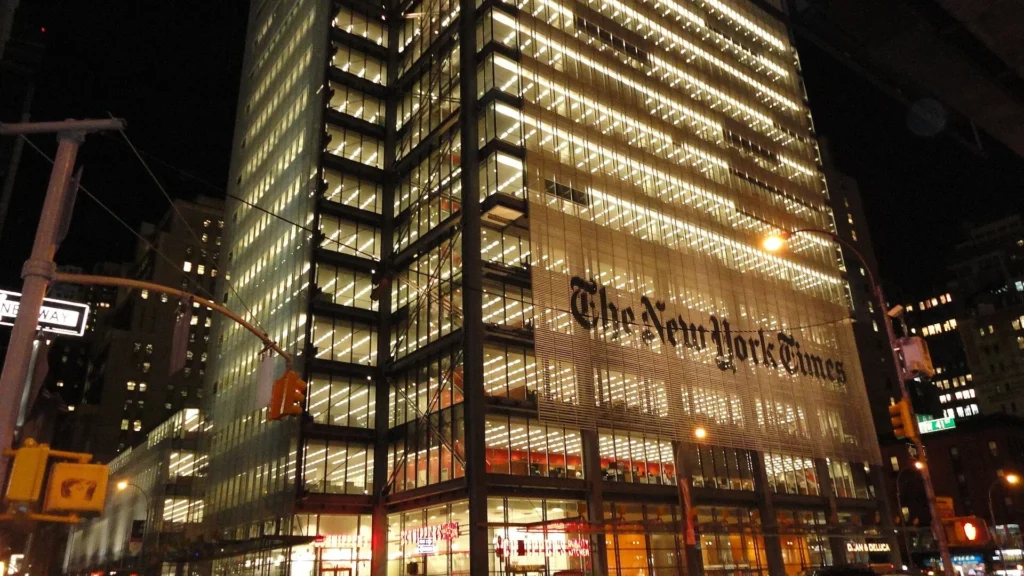
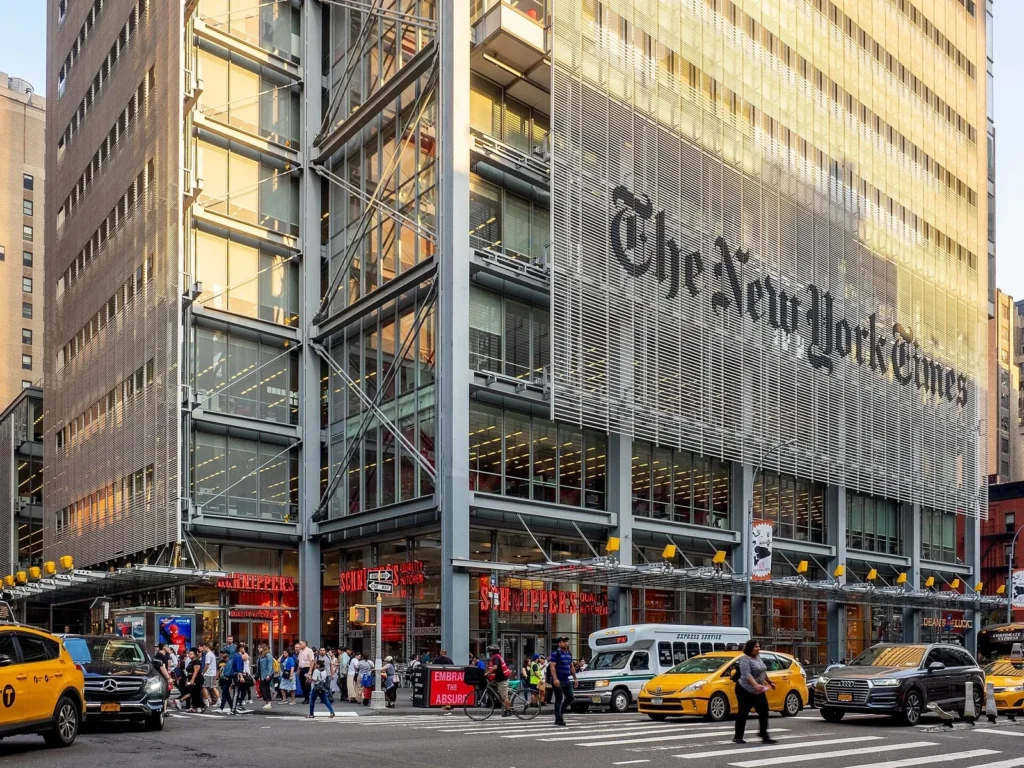
The New York Times has told its contributing photographers to stop using Adobe Photoshop 2027 on Times assignments, and the trigger is Photoshop AI metadata. According to The Verge, the instruction covers release 28.0.0 and every update after it. The paper’s concern is that some Photoshop functions use generative AI “in ways that may not be apparent to users,” which can leave a photograph tagged as AI-generated.
Meaghan Looram and Josh Haner, two photography leaders at the Times, signed the email. Their wording is blunt: “At this time, we are requiring that all contributing photographers avoid using Adobe Photoshop 2027 (release 28.0.0 and subsequent updates) when working on assignment for The Times.” The report does not say which features caused the problem, and it gives no effective date.
The release in question is the same one Adobe showed off in November, and we covered its lighting tools in our Adobe MAX 2026 Photoshop and Lightroom roundup. This piece sorts what is confirmed from what is guesswork, then looks at what the decision means for editors, freelancers and anyone who builds thumbnails, title cards and stills for video. Facts below were checked against The Verge’s report, Adobe’s help and release pages, and C2PA’s own announcements as of November 24, 2026.
What the Times told its photographers
The directive is narrow in scope and firm in tone. It applies to contributing photographers, the freelancers and outside shooters who deliver images under a Times assignment. It names one product, Photoshop 2027, and one version range, release 28.0.0 and anything newer. It does not ban Adobe, Creative Cloud or earlier Photoshop versions by name.
The Verge says it saw the email. The Times has not, in the sources reviewed here, published a separate public statement, and Adobe has not been quoted responding. That leaves the email itself as the primary document, relayed through one outlet.
The stated reason is about metadata, not image quality. Per the email as reported, using the affected features can result in metadata that identifies photographs as AI-generated. A newsroom that publishes documentary photography cannot afford a file that carries that label, even when the photographer only meant to clean up a stray blemish or adjust a highlight.
One more detail matters for planning. The word “avoid” is broad, yet the email is about assignment work. Nothing in the report suggests the Times is telling photographers what to run on personal projects or for other clients.
Which Photoshop release is affected
Adobe released Photoshop 2027 as version 28.0.0 on November 10, 2026, during Adobe MAX. It replaces the Photoshop 2026 line, which ran as version 27.x. Coverage of the launch from LooksLikeFilm and PiXimperfect lists the headline additions: Relight, Generative Restyle, an updated Remove Tool and Quick Compare. Adobe’s own announcement also mentions an AI Assisted Editor and Markup for guiding AI image generation and edits.
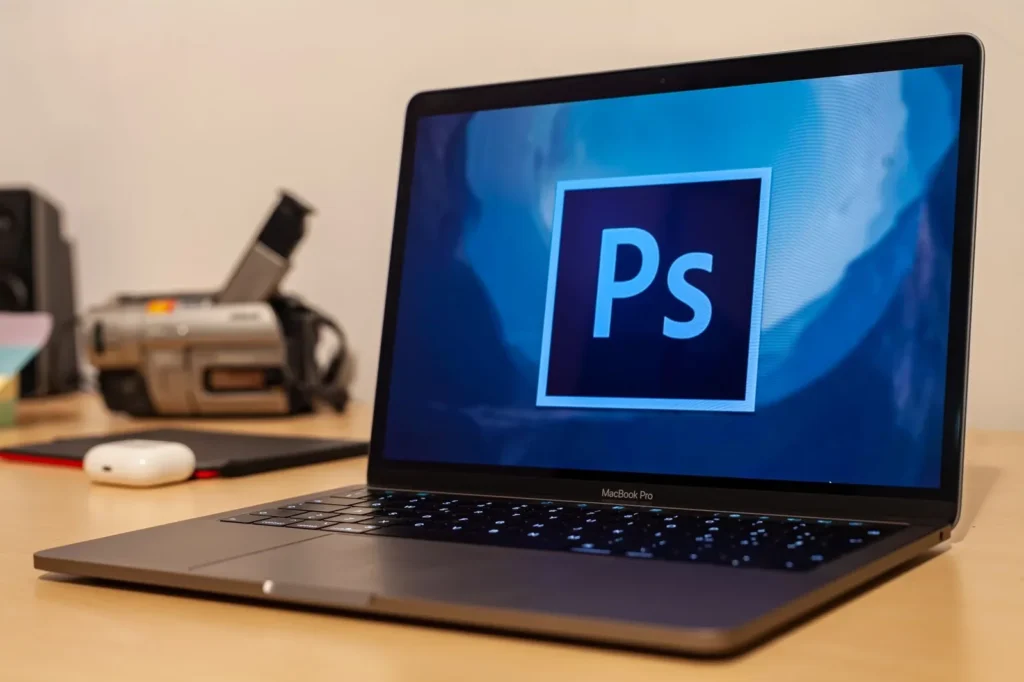
Adobe’s help pages describe image generation in this release using Adobe and partner models, including Firefly Image 5, Flux.2 Pro and Gemini. A beta build, version 28.1, adds an AI Assistant for natural-language edits. Under a literal reading of “subsequent updates,” that beta falls inside the Times restriction too, though the email as reported does not mention beta builds.
Adobe lists Photoshop at $22.99 a month on an annual plan billed monthly, according to the reported plan pages. Photoshop is also bundled into Creative Cloud plans that include it. No price change tied to this story has been reported.
A naming wrinkle is worth flagging. Adobe’s release notes label the November build version 28.0, while the Times email and launch coverage say Photoshop 2027. Both labels point at the same software.
Why Photoshop AI metadata is the sticking point
Content Credentials, built on the C2PA standard, are signed metadata that record what a tool or service says happened to a file. The record can include the application, the AI model, whether content was generated or modified, and the date. Adobe began rolling out C2PA metadata support across its applications in August 2026, so Photoshop AI metadata is a fresh feature of the editing stack, not a long-standing one.
The key point is what the label does and does not mean. Content Credentials do not prove an entire photograph was generated by AI. The same metadata can flag AI-assisted modification, such as a small generative fix on one corner of a frame. For a news desk with a no-manipulation policy, that distinction offers little comfort, because a reader or a verification tool sees a flag either way.
That is the Times’ practical problem. A photographer may not know that a given tool wrote a credential, and the Times says some functions use generative AI in ways that may not be apparent. A ban on the whole release is a blunt but easy-to-audit rule. A feature-by-feature rule would need the Times to know exactly which tools write metadata, and the paper has not said it does.
What is confirmed and what is not
Some retellings of this story could go further than the record supports. The table below separates what the sources show from what they leave open.
| Claim | Status | Source checked |
|---|---|---|
| Times requires contributing photographers to avoid Photoshop 2027 (28.0.0 and later) on assignment | Confirmed | The Verge, quoting the email |
| Email signed by Meaghan Looram and Josh Haner, Times photography leaders | Confirmed | The Verge |
| Stated reason: some functions use generative AI in ways that may not be apparent | Confirmed as the Times’ stated reason | The Verge |
| Adobe attaches C2PA Content Credentials to qualifying generative-AI content | Confirmed | Adobe’s labeling FAQ |
| Which Photoshop 2027 features triggered the restriction | Unconfirmed, the report says it is unclear | The Verge |
| Every Photoshop 2027 edit marks an image as AI-generated | Unconfirmed, and Adobe’s guidance limits automatic metadata to qualifying generative tools | Adobe’s labeling FAQ |
| Effective date of the restriction | Unconfirmed | None stated |
| Adobe statement responding to the Times | Not found in sources checked | None |
The sixth row deserves emphasis. Adobe’s published guidance limits automatic C2PA metadata to qualifying generative-AI tools, so a claim that Photoshop now stamps everything as AI is not supported. What the Times fears is narrower: that an editor can trigger a generative tool without realizing it.
The Times’ own words
Two more statements anchor this story, beyond the directive quoted at the top. Both come from The Verge’s report, and we quote them as that report presents them.
The directive and the reason
Looram and Haner wrote that using the features in question “can result in metadata identifying photographs as AI-generated.” That sentence is the whole logic of the rule. It does not accuse Adobe of hiding anything. It says the Times cannot control the label once a photographer opens the app.
The standing policy behind it
The Verge’s report also repeats the paper’s long-running photo rule. The Times says: “We do not retouch or digitally manipulate photos, but may make minimal adjustments to color to ensure we are accurately reproducing the image.” That policy predates this Photoshop restriction, and it should not be read as the start date of the ban. It does explain why the Times treats an AI flag as a policy breach and not a cosmetic annoyance.
How Adobe’s Content Credentials work in 2026
Adobe says qualifying generative-AI content created or modified in its apps automatically carries durable, machine-readable C2PA metadata. Its generative AI content labeling FAQ lays out the rule and, importantly, ties the automatic label to the generative tools. Tools outside that category fall outside the automatic label.
Photoshop’s documentation still tags its Content Credentials panel as beta, in an Adobe page last updated October 27, 2026. The Times email does not say which Photoshop 2027 tools worry the paper, so a reader cannot tell whether the concern is the automatic label on generative tools or something else in the app.
One more rule shapes the practical options. Adobe’s generative-AI licensing terms, as documented in its November release notes, prohibit customers from intentionally removing, altering or disabling provenance or metadata tags, including C2PA metadata, on content made with Adobe’s generative features. Stripping a credential to dodge a newsroom rule would break those terms, and it would also defeat the reason the Times asked photographers to steer clear.
Timeline from C2PA rollout to the Times email
The Verge’s report landed 14 days after the Photoshop 2027 release and roughly three months after Adobe’s C2PA rollout began. The sequence below uses dates from C2PA, Adobe and The Verge.
| Date | Event | Source |
|---|---|---|
| Late 2025 | C2PA launches its Conformance Program for products that show a Content Credentials badge | C2PA |
| February 9, 2026 | C2PA announces Content Credentials 2.3 | C2PA |
| August 2026 | Adobe begins rolling out C2PA metadata support across its applications | Adobe help pages |
| September 3, 2026 | Adobe announces Anil Chakravarthy will become president and CEO, with Shantanu Narayen as Executive Chair | Adobe newsroom |
| November 10, 2026 | Photoshop 2027 (28.0.0) ships with Relight, Generative Restyle, an updated Remove Tool and Quick Compare | Adobe and launch coverage |
| November 24, 2026 | The Verge reports the Times email restricting Photoshop 2027 | The Verge |
| December 1, 2026 | Adobe’s announced CEO transition takes effect | Adobe newsroom |
| Early 2027 | Adobe plans a private beta of local MCP integrations for Creative Cloud tools | Adobe newsroom |
Two items on that list are announced, not finished. The CEO handover is scheduled for December 1, and the MCP integrations, which connect AI agents to apps such as Photoshop, are planned for private beta in early 2027. Neither has shipped, and nothing in the sources links either one to the Times decision.
Market impact: freelancers, newsrooms and Adobe
Freelancers feel this first. A contributor who pays for Photoshop and updates on release day now has a version they cannot use for one client. The practical fix, staying on the 2026 line or using another tool for Times work, costs time and may cost a second subscription. The sources do not say whether the 2026 line stays easy to install for new downloads, so plan around that gap.
Newsrooms feel it as a verification question. The AI flag does not tell an editor how big the change was, only that a generative path was used. That pushes desks toward either blanket rules like this one or toward asking photographers for raw files and edit logs. The Times chose the blanket rule.
Adobe faces a trust problem on top of a product push. In the same month it shipped Photoshop 2027, Adobe announced a collaboration with Google DeepMind to explore more AI image-editing capabilities, beginning with Photoshop. That announcement does not confirm a specific Google model is already inside Photoshop 2027. It does show the Photoshop AI toolset is growing, which makes per-feature clarity more valuable for press clients.
Rival editors gain an opening, though no source here shows any of them behaving differently on metadata. Readers weighing a switch can start with our comparison of DaVinci Resolve against Premiere Pro and our ranking of professional video editing software. Those cover video work, so treat them as a map of the field, not proof of anyone’s provenance behavior.
Competitive comparison: your options under the rule
For a photographer shooting on a Times assignment, the choice is about which tool touches the file. The table maps the realistic options against the rule as reported.
| Option | Status under the Times rule | Open question |
|---|---|---|
| Photoshop 2027, version 28.0.0 and later | Off limits on Times assignments | Which features write the metadata |
| Photoshop beta 28.1 | Likely covered, since it is a subsequent update (our reading) | The email does not mention betas |
| Photoshop 2026 line, version 27.x | Outside the wording, which names 28.0.0 and later | Whether it stays available to install |
| Another image editor | Outside the wording, which names only Photoshop 2027 | Each app’s own metadata behavior, which this article has not verified |
| Minimal color adjustment only | Matches the Times’ stated policy | Which tool applies it |
If a switch is on the table, cost often decides it. Our look at the free version of DaVinci Resolve and our list of free video editing software show what $0 gets you in video. Resolve is a video-first app, so it is no direct stand-in for a photo retouching tool. Check each product’s documentation before you move a press workflow.
Historical context: no-retouching rules meet provenance tags
News photography has policed manipulation for decades, and the Times’ wording on retouching is among the plainest. What changed in 2026 is that the policing can now happen inside a file. Our editing software archive tracks how the tools have changed over the same stretch. C2PA moved from a spec to an industry program, with its Conformance Program launching in late 2025 and Content Credentials 2.3 following on February 9, 2026.
C2PA also tracks adoption. According to its deployment guidance, reportedly published in May 2026, 54 products from 31 companies had passed conformance, with more than 120 additional companies expressing interest. Treat that count as a single-source figure. It does suggest the metadata is spreading beyond Adobe, which means the Times’ problem with one app could soon recur with others.
What this means for video creators
The Times email concerns still photographs, but video makers share the pipeline. Thumbnails, title-card backgrounds, lower-third portraits and stills for documentary edits often pass through Photoshop. If a client or a platform later reads provenance data, a generative cleanup on a single still can follow the file into the timeline.
Four habits cost little and help. Keep an original copy of every still before any editing. Note which tool touched each asset. Ask a client up front whether it has an AI policy, and which tool versions it allows. Check whether your export keeps or drops metadata, since credentials travel with the file only when the format and workflow preserve them.
Editing choices matter too. If you are rebuilding a workflow, our Final Cut Pro against DaVinci Resolve and CapCut against DaVinci Resolve comparisons cover cost and fit for video.
From the Vipid archive: the intro themes page lists resolution, length and frame rate for each theme, which is the kind of spec sheet worth having before you hand a client a finished intro.
Five predictions
These are analysis, not reporting. Nothing here is confirmed by Adobe or the Times.
- Adobe will publish feature-level guidance. The Times says the AI use may not be apparent, and the fastest fix is a plain list of which Photoshop 2027 tools write Content Credentials.
- Other newsrooms will set tool-level rules. Some will copy the Times’ version ban, others will name specific features once Adobe documents them.
- Warnings will move into the interface. For Photoshop AI tools, a prompt before a generative tool runs, stating that it will tag the file, is the obvious design response.
- Video editors will face the same question. Adobe’s planned early 2027 private beta of local MCP integrations points toward agents driving more of the edit, and each agent step raises a provenance question.
- Freelance contracts will name software versions. Expect clauses that say which release is allowed for a given client, much like codec or color-space requirements today.
Common questions
Did the New York Times ban Photoshop entirely?
No. The email as reported names Adobe Photoshop 2027, release 28.0.0 and subsequent updates, and applies to contributing photographers working on assignment for the Times.
Does every edit in Photoshop 2027 mark an image as AI-generated?
That is unconfirmed. Adobe’s published guidance limits automatic C2PA metadata to qualifying generative-AI tools, and the Times has not said which features worry it.
Which Photoshop AI features triggered the restriction?
The report says it is unclear. Photoshop 2027 includes Relight, Generative Restyle, an updated Remove Tool and Quick Compare, but none of those is named in the email.
What are Content Credentials?
They are signed C2PA metadata that record what a tool says happened to a file. The data can include the application, the AI model, whether the content was generated or modified, and the date.
When does the restriction take effect?
No effective date appears in the sources checked. The Verge reported the email on November 24, 2026.
Can I strip the metadata to stay compliant?
Adobe’s generative-AI licensing terms prohibit intentionally removing or disabling C2PA tags on content made with its generative features. It would also defeat the Times’ stated purpose of avoiding AI-labeled files.
What does Photoshop cost right now?
Adobe’s U.S. page reportedly lists Photoshop at $22.99 a month on an annual plan billed monthly. No price change linked to this story has been reported.
- Vipid intro themes resolution, length and frame rate per theme
- Promo themes product and channel promos
- Sample videos finished Vipid intros
- Vipid intro maker make a custom intro in the browser
Jonah Reyes
Jonah Reyes is the Editing & Export Editor at Vipid. He covers editing software, export settings and codecs, and the video specs of YouTube, Shorts, TikTok and Reels, plus OBS and screen recording. He builds Vipid’s spec tables from the platforms’ own documentation and re-checks them every 60 to 90 days, so the numbers in a guide match what the upload dialog actually accepts.